Sunday, 6 February 2011

Somali Parliament Votes Itself To Continue

Somalia's Tranisitional Federal Government (TFG) has voted overwhelmingly to extend their mandate by a further 3 years.
The parliament speaker, Sharif Hassan Sheikh Aden, stated to reporters that they had voted to extend their term by 3 years in a vote carried out last Thursday 3 Feb 2010. 435 members attended the session with 421 voting for the extension. In a country where the average wage may be between $100 to $400, depending on the research source, the 500-member parliamentarians receive $300 per month from the UN. 
The UN-supported TFG controls small areas of the capital, Mogadishu, backed by 8,000 African Union troops on peacekeeping duty. Surrounded by Islamist insurgents, they are frequently mortared. However, the TFG has failed to enact any laws in the last 6 years. A key law concerning piracy was recently thrown out. The biggest achievement to date: refurbishing the parliament building it has been claimed.

Catherine Ashton, the High Representative of the European Union for Foreign Affairs and Security Policy and Vice-President of the Commission, made the following statement:
"I regret the unilateral decision taken on Thursday by the Somali Transitional Federal Parliament to extend its mandate by three years. The decision was taken hurriedly without appropriate consultations on the way forward.
This step risks weakening the credibility of the Transitional Federal Institutions, and of their leadership, in the eyes of the Somali population. I urge the TFIs to re-engage in a broad consultation process, as it is only through such an inclusive process that there can be a sound reform agenda for the transition and beyond, and thus contribute to peace for the people of Somalia.
Progress achieved in this process will help the EU to define the scope and the extent of its support to the present and future institutional set up." 

 So, what is the next step for the TFG? After 20 years of civil war that has hindered any progress; the curtailing of humanitarian support for the starving people; in view of the increase in piracy off the Somali coast, and the claims that the terrirtorial waters are being abused in terms of fishing and toxic waste dumping... elect a new speaker and deputy. The President is likely to re-elect himself, if he so wishes... according to reports.
The TFG has no influence over the other regions of Somalia - Somaliland, which considers itself independent and better governed; or Puntland which is reportedly the region piracy first sprung from - indeed, when Somaliland was stated as establishing a Coast Guard to combat piracy, trained by a private security company and funded by an unknown Arab state, the TFG tried to stamp authority on Somaliland to absolutely no effect.

Considering that almost every proffered solution to the problem of piracy off the Somali coast has been centred on resolving the problem ashore, namely Islamist insurgency and a starving population, it is difficult to see how there will be any effective progress in the near future. If the TFG cannot look after their own, or at least be seen to be heading that way, the question being asked is how can the UN funding be assured of being used for the betterment of the failed state of Somali?

Spanish Skipper's Evidence Following Release From Somali Pirates

Skipper of Spanish Fishing Vessel Alakrana, Gives Evidence (eitb.com)
FV Alakrana (Image: tunaseiners.com)
Speaking in front of the National High Court in Madrid, Ricardo Blach, stated that he told a soldier on board the Spanish warship Canarias that the arrest of two pirates would hinder the rescue mission.

Captain Ricardo Blach of Basque tuna-fishing vessel, the Alakrana, which spent 47 days seized by Somali pirates, confirmed that the accused Somali pirates, Raageggesey Hassan Aji and Cabdullahi Cabduwily, alias 'Abdu Willy', were two of the members of a group of pirates that hijacked the vessel on 2 October 2009.
Calmly delivering his statement, Blach stated the Alakrana  was fishing in international waters close to the Somali coast. He further stated that neither one of the accused pirates hit him at any point during their time on the vessel, but they had made threatening gestures. "All of them made gestures," he added, "suggesting they would cut your  throat" he went on to say.
Blach described the moment when the pirates first attacked the ship as it started to trail the tuna at dawn. 2 pirate skiffs with 13 persons onboard began shooting at the fishing crew before forcibly boarding the vessel: "At that point they gave me a tremendous beating," he said.
Holding Kalashnikovs to intimidate and cramming the crew together in the sailors' mess, to lie on top of the tables; and unable to rest, he stated.

Describing the arrest of the accused pirates, 'Abdu Willy' and Hassan Aji, by the Spanish warship Canarias, serving as part of the EU's NAval Force 'Operation Atalanta' (Headquarters based in Northwood ,UK), he said he used the time permitted by the pirates to call his family to make contact with the warship.
"I spoke with one of the military crew and asked him if he intended to go public; when he said yes, I told him. 'you've messed up'," explained Blach.
The skipper explained that when the remaining pirates found out about the arrest, they subjected the Alakrana crew to "a terrible night", only calming down when they realised their fellow pirates had been injured but not killed. 

The skipper went on to say how dreadful the experience was. He said he had "...spent 18 days in my pyjamas without a shower. I peed myself countless times because they wouldn't let me go to the bathroom."  He went on to say, "They were always on drugs; they would start in the morning and by night time they were all in a bad state. They were constantly fighting. We experienced constant danger," added the captain.
In relation to the paying of a ransom for their release, Blach said he did not see the pirates receive any money at any given point neither by helicopter nor by any other means.

A Basque trawler from Bermeo, Biscay, the Alakrana was hijacked by Somali pirates on October 2nd, 2009, in international waters of the Indian Ocean. A month before, the ship had not long seen off another hijack attempt.
The crew of the Alakrana was comprised of 7 seamen from the Basque region; 9 from the Spanish Galician region; 2 Malaysian; 3 Senegalese; 4 Ghanaian; 2 Ivorian; 8 Indonesians and 1 Seychellois when the vessel was captured 350 miles off the Somali coast. At that time the area in which they were hijacked was outside of the joint operations area of the EU's Op Atalanta, which was launched in December 2008, to deter and disrupt piracy and armed robbery off the coast fo Somalia in according with UN regulations.
Prior to the attack, it was claimed the crew of the Alakrana had 7 minutes in which to raise the alarm and establish contact with other shipsin the area. Having taken the vessel to Somalia, the pirates allowed the crew to call the ship-owner "at least once a day," mostly likely to put pressure on them to make a ransom payment. However, initially, the Spanish government said it would not pay the pirates any ransom.


In the two days following the hijacking, two suspected pirates, Raageggesey Hassan Ajiand Cabdullahi Cabduwily, were captured by the Spanish frigate Canarias as they navigated a small boat in the vicinity of the Alakrana. Spanish High Court Judge Baltasar Garzón opened legal proceedings against the men.
On 5 October, Garzón imprisoned the two pirates. In all, they were accused of 36 crimes of false arrest, 1 count of illegal assembly and another for robbery with violence and the ues of weapons.
The remaining pirates involved in the hijack of the Alakrana stated they would not release the trawler unless the detainees were returned to Somalia. Skipper, Ricardo Blach, stated the situation was simple: "If the arrested pirates were allowed to return to Somalia, everything would be fixed; that's what they want," he told Basque public radio.
The pirates continued to press for the release of their two men; The families of the fishermen met with Spanish President Zapatero to ask that the two Somali pirates be extradited to Somalia. When the hostages were released, the two Somali suspects remained in custody in Madrid. On 16 October they were formally charged with kidnapping and related charges.


It is claimed that the release of the Alakrana crew was achieved following a promise by the then Spanish Ambassador to Kenya, Nicolás Martín Cinto
, giving his word as a man of honour that the two Somalis would be repatriated immediately - a promise which was further claimed to have been broken. As a consequence, it is said to have made the release negotiations relating to the FV VEGA 5 extremely difficult.

More recently, it is estimated that at least 2 fishing vessels are being used for mothership operations, a development Alakrana was fortunate to avoid during the time of her capture.

Source: Medeshi Valley 

Thursday, 3 February 2011

IMO - Piracy: Orchestrating the Response

The International Maritime Organisation (IMO) during the Sub-Committee on Standards of Training and Watchkeeping (STW 42), held a workshop entitled "Piracy: Orchestrating the response”: Workshop on piracy, on 26 January. A Speech by Efthimios E. Mitropoulos, the Secretary-General of IMO, was given in which he stated the workshop was to "kick start the action plan to keep piracy at bay."

He gave some statistics, which he said "make very unpleasant reading" as follows:
  • In 2010, 253 ships were attacked by pirates resulting in 61 ships hijacked and 1072 seafarers taken hostage; 
  • To date, 30 ships and 730 seafarers are in the hands of pirates, of which 7 ships, totalling 109 seafarers, were hijacked since the beginning of the year.
The statistics most regularly quoted for 2010 are those from the International Maritime Bureau Piracy Reporting Centre (IMB PRC). Using the statistics from IMB would most likely have delivered more unpleasantness than those the Secretary General mentioned, but it would indicate more lucidly the impact on the seafarer in these dangerous waters around the world. The IMB statistics, available in their annual report (free but a donation is welcomed), are as follows:
  • In 2010, 445 attacks were reported, up 10% from 2009;
  • In 2010, 53 ships were hijacked;
  • In 2010, 1181 hostages were captured by pirates - 8 were killed;
  • To date (29 January IMB), 33 ships and 758 seafarers are held by Somali pirates, showing 7 ships and 148 seafarers were taken in 2011.
Those statistics are quite hard-hitting. The IMB has gathered such data for some time now. The IMO stats could have been cross-referenced to ensure an accurate picture is delivered to the maritime community. However, the main point here is that the plight of the seafarer has not improved, hence the workshop and as the Secretary general said, "...very much with seafarers, and those who sail in piracy-affected areas in mind that the IMO Council decided that this year’s World Maritime Day theme should be “Piracy: orchestrating the response”.

The fact the IMO has been dealing with piracy issues for over 30 years - 80's Gulf of Guinea; 90's and early 00's South China Sea, Malacca Straits and Singapore, and the more recent, high profile, Horn of Africa/Indian Ocean - arms them with experience in reducing the effect of piracy. But to use that experience gained and the successes achieved "...requires an orchestrated and coordinated response."

So, with that said, the Secretary General  stated the IMO's position.  Extracting from his speech, the IMO has "developed, in co-operation with the shipping industry, seafaring representative organizations and other stakeholders, an action plan to maintain and, indeed, strengthen our focus on anti-piracy endeavours of all kinds and to facilitate a broader, global effort. We have identified six prime objectives that we hope all stakeholders will espouse  and take action on during 2011 and beyond, if necessary. They are:
  • one: to increase pressure at the political level to secure the release of all hostages being held by pirates;
  • two: to review and improve the IMO guidelines to Administrations and seafarers and promote compliance with industry best management practices and the recommended preventive, evasive and defensive measures ships should follow;
  • three: to promote greater levels of support from, and coordination with, navies;
  • four: to promote anti-piracy coordination and co-operation procedures between and among States, regions, organizations and industry;
  • five: to assist States to build capacity in piracy-infested regions of the world, and elsewhere, to deter, interdict and bring to justice those who commit acts of piracy and armed robbery against ships; and
  • six: to provide care, during the post-traumatic period, for those attacked or hijacked by pirates and for their families.
In clarifying the IMO's position, the Secretary General pointed out that a solution to the Somali problem needed engagement at the political level. It is "...a matter for the United Nations to pursue and neither IMO nor the maritime community have any substantive role to play in it."

Calling "...the world’s attention to the unacceptable plight of the innocent victims of pirates...", the IMO "intend to promote further co-operation between and among States, regions and organizations in reducing the risk of attacks on ships through information-sharing; coordination of military and civil efforts; and development and implementation of regional initiatives, such as the IMO-led Djibouti Code of Conduct."  There should be no respite in their efforts whilst at the same time "promoting even greater levels of coordination among navies, above and beyond the unprecedented degree of co-operation that has already characterized the international naval response."
In the case of Somalia, the IMO seeks to contribute, including "the potential development of a coastal monitoring and law-enforcement force," and will " work with Governments and the industry to ensure that released seafarers and their families receive care during the post-traumatic period."
The Sec gen went on to mention the work of the UN Contact Group for Piracy off the coast of Somalia; the Djibouti Code of Conduct efforts in establishing information-sharing centres in Yemen, Kenya and the United Republic of Tanzania, as well as a regional training centre in Djibouti. However, in view of the bleak statistics, mentioned above, the IMO are neither proud of, nor content with, the results achieved so far, and subsequently, this year, are resolved to redouble their efforts and, in so doing, generate a broader, global response to modern-day piracy. More needs to be done, by them and others.

If only sharing such information was more widely publicised. There has not been much in the press, either paper, digital (social media) or television.

People are using social media to speak their mind, state their position, express opinion, raise awareness; you name it, they are willing to say something about it. Look at the recent events in Tunisia, Algeria and Eqypt...even the U.S. State department issued guidance via social media, reaching more than just a televison broadcast ever could. This is information-sharing; this is another powerful forum the IMO and other authorities and organisations can utilise to get their message across in support of the seafarers. Make it so!

Full speech available here; courtesy of IMO.org

Tuesday, 1 February 2011

Somali Piracy Dynamics Change Almost Daily

A 2006 photo of the Beluga Nomination
The pirates were steering the captured ship to port after the shoot
Source: BBC News

Sailor dies in clash with pirates north of Seychelles

In an article published by the BBC News website (follows below), the almost-daily changing dynamics of the piracy situation in the Horn of Africa and Indian Ocean regions, has led to a tragedy. The game-changer was the rescue missions carried out by South Korea and Malaysia. However, the calls for action following such frustrations relating to Beluga Nomination, seems to have encouraged an attitude of 'daring rescue' by some within the shipping industry. But at what cost? Any rescue action must be carefully thought out with due consideration of the welfare of the crew, and the vessel; the cargo may be dangerous as well as valuable (although Beluga Nomination was carrying luxury yachts and speedboats). The big three military authorities have stated their position. They are not operating under a single governments control, therefore, the EU, NATO and CMF decision-makers have to follow their mission mandate. Any departure must be authorised, and that is not easily done.
Here is the BBC...

A German ship-owner has confirmed the death of a sailor during a failed bid to free a cargo ship seized by Somali pirates off the Seychelles last week.
A Seychelles patrol ship opened fire while trying to free the Beluga Nomination on Wednesday, the head of Bremen-based Beluga told German media.
One pirate was killed and the others shot dead a crewman in retaliation, Niels Stolberg said.
Mr Stolberg described the response to the hijacking as a "disaster"
Somali pirates have made millions of dollars in recent years by capturing cargo vessels in the shipping lanes around the Horn of Africa, and are currently reported to be holding 29 ships, along with hundreds of crew members.
It is unusual for pirates to shoot a captive and navies patrolling the region to protect shipping are reluctant to use force because of the risk to captured crews.

BBC map
Image source: BBC News
'Fit of anger'
The cargo ship, which is 9,775 dead weight tonnes, was captured last Monday by armed pirates using a skiff, 390 nautical miles (722km) north of the Seychelles.
A Seychelles patrol boat appears to have reached the hijacked vessel first, with a Danish warship from Nato's counter-piracy force only arriving after the fatal clash.
When the Seychelles boat opened fire the pirates "evidently lost control", Mr Stolberg told the Frankfurter Allgemeine Zeitung newspaper.
In the ensuing confusion, reports suggest the crew tried to overwhelm their captors, and two crew members managed to escape.
"The pirates shot dead one of our men, probably in a fit of anger," Mr Stolberg said.
Nato spokeswoman told the BBC News website that when the Danish ship, the Esbern Snare, reached the scene, the master of the Beluga Nomination urged it to keep its distance because of the earlier clash.
"We did not want to inflame the situation so we backed off," the spokewoman said.
Nato, she added, could not comment on the actions of the Seychelles patrol boat.
The Seychelles authorities are expected to make a statement on the incident later this week.

'Disaster'
Two members of the Beluga Nomination's 12-strong crew - made up of Poles, Filipinos, Russians and Ukrainians - managed to escape in a life boat and were picked up two days later by the Danish ship.

The German ship owner described attempts to rescue them as a "disaster".
"The crew spent two and a half days in a reinforced room but nobody came to help them," he said.
"The international community has failed. An absolutely uncoordinated intervention like that is totally incomprehensible."
Mr Stolberg added that the cargo ship's navigational equipment had been damaged in the shooting and the pirates had called out another captured ship, the York, to assist it in reaching the Somali coast.
Pointing out that the pirates had been exhausted and disorientated after the shooting, he criticised both the Nato force and EU NAVFOR, the EU's counter-piracy force, for failing to intervene.
The spokesman for EU NAVFOR, confirmed for the BBC News website that the MV YORK had drawn alongside the Beluga Nomination, and the two ships were proceeding north towards Somalia together.
But he stressed that both vessels had been hijacked and any attempt to intervene would put the lives of the captive crews at risk.
Hate to say "We told you so, but..."

In an editorial item on our parent site published in November 2010, we asked a question... Citadels; Safe? For How Long? Following the recent hijack of the MV BELUGA NOMINATION, once one delves past the confusion of what actually occurred over a 4 day period surrounding the capture, the article seems rather prophetic.
The incidents mentioned in the article related to the MV BBC ORINOCO where "the crew locked themselves in the ship's engine room and the steering compartment and communicated with their agents, UK MTO Dubai via email"; MV MAGELLAN STAR - 'rescued' by US Marines; MV GO TRADER - pirates abandon vessel; MV BELUGA FORTUNE - 'rescued' by Royal Navy frigate. That's right; another Beluga vessel had used their citadel, successfully.

BELUGA NOMINATION, however, saw the Bremen-based owners stating their frustration over the lack of response from the counter-piracy warships in the Horn of Africa region. The BELUGA NOMINATION, carrying luxury yachts and speedboats (may be useful to a pirate chief) had been reported attacked on 22 January. The crew had gone into the citadel and remained there for over 2 and a half days, having sent out a distress call. Compounded by the confusion over 4 days of information concerning the incident, such as being reported to be 390NM off Seychelles, or 800NM depending on which report is to be believed. Moving on. The fact that the crew was holed up for days, as opposed to hours, gave the pirates more than enough time to work on breaching the citadel; which they eventually managed to do through the ceiling, which would indicate that the citadel was actually somewhere within the housing!. Imagine the growing fear of the crew as they await rescue, listening to the pirates working at prying their prey from its shell...

The nearest warship was over 1000 nautical miles away, reported to be awaiting an humanitrian aid vessel on its way to Somalia. The Seychelles Coast Guard was somewhat closer, but the bad weather precluded any opportunity to render assistance. Read more in the blog, Manu's News. As stated throughout the counter-piracy operations by the various coalition forces, warships "can't be everywhere", much to the annoyance of the Beluga shipping company who accused NATO, the European Union and the responsible coastguards of a breakdown in communications and operations.Spending millions each year on training, equipment and insurance, only for another of their vessels to be taken, is clearly galling. The company is now a leading voice in asking the German government to deploy armed naval personnel on German-flagged and -owned vessels transiting the dangerous shipping lanes.


But back to the citadels. The differing standards, if any are actually applied, in the provision of citadels can be such polar opposites it is hard to see how this can be properly governed. It's like the 'recommendations' in the Best Management Practice book, just recommendations. The different vessels, security plans, national and/or flag state regulations are too diverse to see BMP enforced, so how can citadels be enforced. BELUGA NOMINATION and MV LEOPARD a few weeks earlier, have seen confidence shaken on that score.


OCEANUSLive believes in the viral diffusion of information. If the ships had a secure, real-time, information exchange capability with various authorities, Company Security Officers and the like, the chances of being left for so long would become very slim. As part of a layered defence mechanism, OCEANUSLive supports the process of registration with MSC(HOA) and reporting to UKMTO. It's better if the vessel whereabouts is known by the authorities when transiting high threat environments. Even better when you can communicate in real-time!


If any CSO would like to discuss how to create compartment lockdown throughout a vessel, so that access can be controlled at every door or compartment (much like high security prisons, government complexes, and even oil platforms), we are in a position to provide a security consultant to listen to your needs. Why cede the whole ship to the pirates if they get on board when you can lock their access in a layered defence approach? Send us an email at team@oceanuslive.org .

Monday, 31 January 2011


* Two sailors escape hijacked ship to safety
* Another German ship attacked in Indian Ocean but escapes

Original Article By Brian Rohan
BERLIN, Jan 29 (Reuters) - Two hostages are reported to have escaped a German cargo ship, the Antigua and Barbuda-flagged, German-owned, BELGUA NOMINATION, captured by Somali pirates on the previous Saturday, 800NM off the Seychelles and are safely aboard a Danish navy vessel, a spokeswoman for the ship's Bremen-based owners said on Saturday.
They did not confirm details of a report by German magazine Der Spiegel which said the two -- from the 12-men crew -- escaped during a firefight on Wednesday in which two other crew and up to two pirates were alleged to have been killed.
"Currently two members of the crew are missing," CEO Niels Stolberg of Beluga Shipping said in a later e-mail exchange. "Two other seamen could be rescued yesterday, and they are safe and sound," he said, adding that no ransom had been demanded.
According to the Spiegel report, the deaths occurred after a Seychelles patrol boat opened fire on the pirates in an attempt to rescue the ship. Two crewmembers escaped by jumping overboard in a life boat.

A report this month said piracy worldwide was costing the global economy $7-12 billion a year, with Somali pirates in particular driving up the cost of shipping in the Indian Ocean.
It was further reported that, on Saturday, another German-based operator, Hamburg-based Chemikalien Seetransport, had of its tanker ships, the NEW YORK STAR, carrying chemicals coming under attack on Friday in the Indian Ocean but had managed to escape.
Small arms and rocket-propelled grenades (RPGs) were fired from a small craft as the pirates tried to board the ship, which escaped and was then escorted by a Dutch frigate.
German shipping companies have approached the German government in an effort to deploy military or federal police personnel on merchant shipping at key points to protect them against Somali pirates.

What Does OCEANUS Actually Mean?

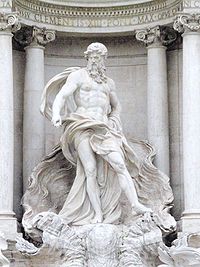
Oceanus;Trevi Fountain, Rome
In classical antiquity, Oceanus (from Greek: Ὠκεανός, lit. "ocean"[1]) was believed to be the world-ocean, which the ancient Romans and Greeks considered to be an enormous river encircling the world.

Some scholars believe that Oceanus originally represented all bodies of salt water, including the Mediterranean Sea and the Atlantic Ocean, the two largest bodies known to the ancient Greeks. However, as geography became more accurate, Oceanus came to represent the stranger, more unknown waters of the Atlantic Ocean (also called the "Ocean Sea"), while the newcomer of a later generation, Poseidon, ruled over the Mediterranean.

When Odysseus and Nestor walk together along the shore of the sounding sea (Iliad ix.182) their prayers are addressed "to the great Sea-god who girdles the world." It is to Oceanus, not to Poseidon, that their thoughts are directed.
Source: Wikipedia

OCEANUSLive, by delivering a collaborative environment for the sharing of secure, real-time, maritime-based information, seeks to advance the comprehensive and coordinated response to the mitigation of risk in the maritime domain - across the bodies of water encircling the world.  By converging access to information through crowdsourcing, mapping and other social media, OCEANUSLive brings technological democratisation and the viral diffusion of information to the maritime community. 
Changing the game for the shipping industry against asymmetric adversaries such as pirates can only benefit the seafarer and, as a result, the economic stability of trading nations.

OCEANUSLive.org
Information, Security, Safety; Shared